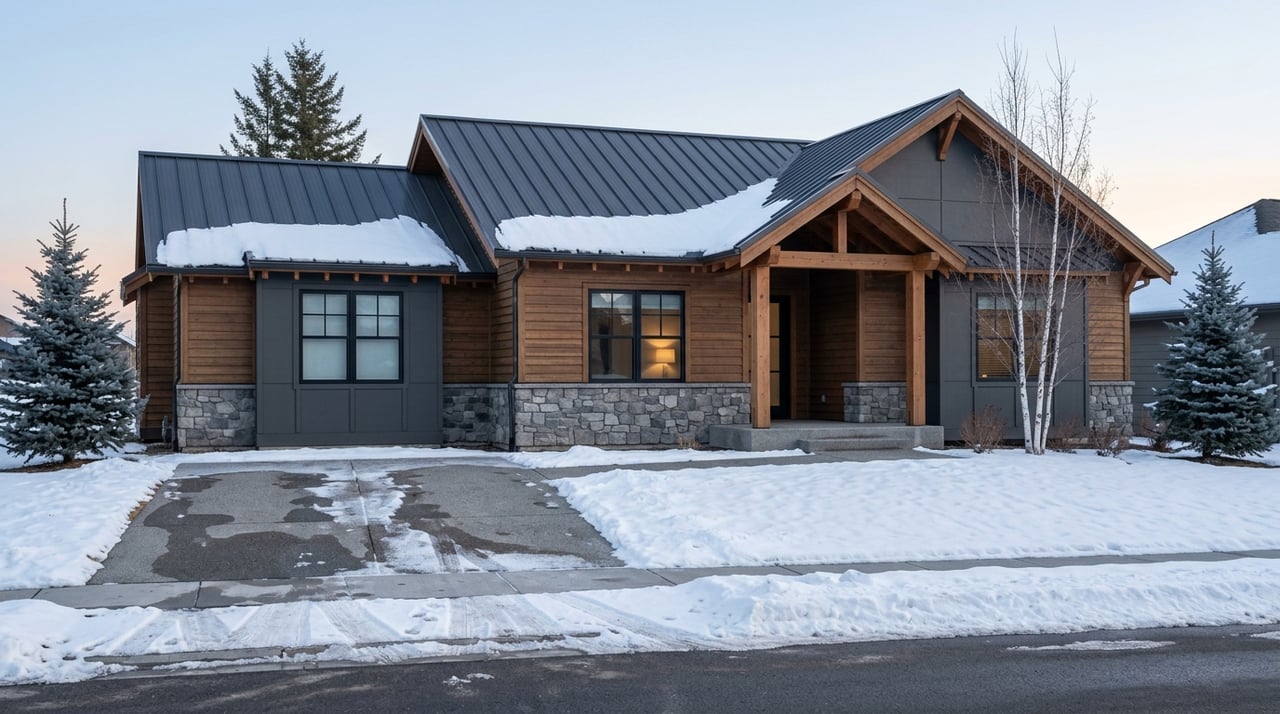
Wondering whether you should stay close to town or spread out on a few acres in Kalispell? It is one of the biggest lifestyle decisions local buyers make, and the right answer depends on how you want your days to feel. If you are weighing convenience, privacy, upkeep, and long-term fit, this guide will help you compare the tradeoffs with a clear local lens. Let’s dive in.
Why this choice matters in Kalispell
Kalispell offers a mix that is hard to ignore. The city had an estimated 31,296 residents as of July 1, 2024, and it serves as the Flathead Valley’s retail, professional, medical, and governmental center for roughly 140,000 people in Northwest Montana. That means you get the feel of a larger small city without the pace of a major metro.
At the same time, Kalispell is closely tied to outdoor access. The city notes that Flathead Lake, Whitefish Mountain Ski Resort, Blacktail Mountain Ski Resort, Glacier National Park, and several public lands are within about a 30-minute drive. You are not choosing between city life and Montana life here. You are choosing how much land, convenience, and responsibility you want at home.
What in-town living looks like
In-town Kalispell usually means living on a smaller lot with easier access to daily needs. The city’s residential zoning districts include minimum lot sizes of 20,000 square feet in R-1, 10,000 square feet in R-2, and 6,000 square feet in R-3, R-4, and R-5. That zoning mix helps support a range of housing types, including smaller-lot single-family homes, townhomes, condos, and apartments.
For many buyers, the biggest advantage is simplicity. In-town properties are more likely to have city water and sewer service, while out-of-city utility service is conditional and may require city approval and annexation-related paperwork. If you want fewer moving parts when evaluating utilities, in-town living often feels more straightforward.
Daily convenience also stands out. Logan Health Medical Center is located just over a mile north of downtown Kalispell, and the city maintains streets and handles snow removal operations, including plowing and sanding. If your schedule is busy or you want easier access to services, that can be a meaningful benefit.
In-town perks to consider
- Easier access to shopping, healthcare, and professional services
- More likely to have municipal water and sewer
- City street maintenance and snow removal
- Smaller lots that may require less exterior upkeep
- Housing options beyond detached single-family homes
In-town tradeoffs to expect
- Less privacy than many rural properties
- Smaller outdoor space
- Less flexibility for uses that need more land
- Pricing does not always mean lower cost just because the lot is smaller
That last point matters in Kalispell. Current market snapshots show smaller-lot homes listed around 0.25 acres for $625,000, 0.26 acres for $850,000, and 0.30 acres for $1.19 million. In other words, an in-town property can still command a strong price depending on condition, features, and location within the city.
What acreage living looks like
Acreage around Kalispell usually means more space, more privacy, and a more rural setting. Flathead County zoning reflects that clearly. Rural and agricultural districts include R-2.5 Rural Residential with a 2.5-acre minimum lot area, SAG-5 and SAG-10 Suburban Agricultural, and AG-20 Agricultural with a 20-acre minimum lot area.
The county’s planning language also ties larger parcels to the rural experience itself. Flathead County notes that one lot per 20 acres is used to help maintain rural character, and one lot per 10 acres can still preserve rural privacy, lifestyle, and wildlife characteristics. So when buyers say they want acreage, they are often looking for more than just a bigger yard. They want breathing room and a different day-to-day feel.
Acreage properties can also come with more flexibility depending on zoning. County regulations identify uses that may include single-family homes, agricultural or horticultural use, livestock, stables, accessory dwelling units in some districts, and other rural property features. That is why acreage buyers often explore hobby farms, horse setups, ranchettes, or homes with shops and accessory structures.
Acreage perks to consider
- More privacy and separation from neighbors
- Space for outbuildings or rural uses where allowed
- Room for gardening, animals, or equipment depending on zoning
- A quieter, more rural setting
- A property style that often feels more connected to the surrounding landscape
Acreage tradeoffs to expect
- More land to maintain
- More detailed review of septic, roads, and utilities
- Longer drives for errands and services in many cases
- Road surface and winter conditions can vary more outside town
Flathead County’s road system is a good example. The county maintains about 350 miles of paved roads and 550 miles of gravel roads, with snow plowing and winter maintenance included. That does not make acreage a bad choice, but it does mean your drive home may feel very different depending on the property.
Utilities and infrastructure matter more on acreage
If you are leaning rural, infrastructure due diligence should move to the top of your list. Flathead County’s Environmental Health program handles septic permitting and land research, and the county’s septic regulations and construction standards changed on April 1, 2026. That makes septic review an essential step when you are comparing acreage properties.
Water and wastewater setup can vary widely outside city limits. Unlike many in-town properties that are more likely to have municipal service, rural homes may depend on other utility arrangements that need careful review during your search. This is one of the biggest practical differences between the two lifestyles.
Acreage buyers should also look closely at access. Ask about road type, maintenance responsibility, winter conditions, and how the property functions through all four seasons. A beautiful parcel can feel very different in January than it does on a sunny summer afternoon.
Commute and convenience in daily life
Kalispell’s mean travel time to work is 14.9 minutes, which helps explain why many buyers find in-town living easy to manage. A shorter drive can make school drop-offs, appointments, errands, and evening plans feel simpler. If your schedule is packed, that convenience adds up quickly.
Transit exists in Flathead County, but it is limited compared with larger metro areas. The Mountain Climber provides general public and paratransit rides within the county, with Kalispell service running Monday through Friday from 7:00 a.m. to 6:00 p.m. Most fares are $1 each way, service is on-demand with no fixed routes, and inclement weather can cause delays.
For most buyers, that means your car and your location still shape your day in a big way. If you value quick access to appointments and services, in-town may feel easier. If you do not mind more drive time in exchange for space and privacy, acreage may be worth it.
Price ranges can overlap more than you think
One of the biggest misconceptions is that in-town always means less expensive and acreage always means much more. In reality, Kalispell pricing can overlap depending on the home, land, finish level, and location. Public market snapshots vary by source, with recent city-level figures ranging from a median sale price of $487,000 to about $640,667, and a median listing price around $652,000.
Land pricing also covers a wide range. Recent listings in Kalispell and Flathead County show about 4.1 acres for $279,000, 4.66 acres for $499,900, 5-acre parcels around $345,000 to $370,000, 5.3 acres for $435,500, and 28.74 acres for $597,000. Homes with acreage stretch even wider, from about $725,000 on 5.03 acres to $6.49 million on 23.84 acres.
That is why your budget should connect to your priorities, not just acreage count. A smaller in-town lot does not automatically mean a lower price, and a larger rural parcel does not automatically mean a luxury purchase. The details matter.
How to decide what fits you best
The best choice usually comes down to how you want to spend your time. If you want simpler utilities, quicker errands, and easier access to healthcare, work, and city services, in-town Kalispell may be the better fit. If you value privacy, room to spread out, and a more rural atmosphere, acreage may feel more like home.
Here is a simple way to think it through:
In-town may fit if you want
- Shorter drives for daily errands
- Municipal services when available
- Less land maintenance
- A home base near parks, trails, and city amenities
- A more straightforward ownership experience
Kalispell’s parks system includes 445 acres of parkland and natural open space across 28 city parks, and the Parkline Trail is one of the city’s major trail projects. If you want access to outdoor recreation without maintaining a large property, this can be a strong middle ground.
Acreage may fit if you want
- More privacy and separation
- Space for rural uses allowed by zoning
- Room for accessory structures or animals where permitted
- A quieter setting with a broader sense of openness
- A property that feels more custom to your lifestyle goals
Neither option is better across the board. It is about matching the property to the life you actually want to live year-round.
A local-first way to shop smart
In Kalispell, the in-town versus acreage decision is not just a map question. It is a lifestyle, budget, and due-diligence question all at once. The best move is to compare homes through the lens of commute, maintenance, utilities, zoning, and how you want an average Tuesday to feel.
That is where local guidance makes a real difference. If you want help comparing neighborhoods, rural areas, lot setups, and the practical tradeoffs between city convenience and land, Nelson Schwab offers a no-pressure, local-first approach to finding the right fit in Kalispell and across the Flathead Valley.
FAQs
How does in-town living in Kalispell usually differ from acreage living?
- In-town living usually means smaller lots, easier access to services, and a higher chance of city water and sewer, while acreage usually means more privacy, more land, and more review of septic, roads, and utilities.
What lot sizes are common for in-town properties in Kalispell?
- Kalispell city zoning includes residential minimum lot sizes of 20,000 square feet in R-1, 10,000 square feet in R-2, and 6,000 square feet in R-3, R-4, and R-5.
What counts as acreage property near Kalispell?
- In Flathead County, rural zoning includes districts like R-2.5 Rural Residential with a 2.5-acre minimum lot area, along with larger agricultural districts such as AG-20 with a 20-acre minimum lot area.
What should buyers review before purchasing acreage in Flathead County?
- Buyers should carefully review septic permitting, land research, utility setup, road type, access, and winter maintenance because these can vary more on rural properties than they do in town.
Are in-town homes in Kalispell always less expensive than acreage properties?
- No. Smaller-lot homes in Kalispell can still be priced at higher levels depending on the home’s condition, finishes, and location, while acreage pricing ranges widely based on land size, improvements, and setting.
Is public transportation in Kalispell enough to replace driving?
- Flathead County’s Mountain Climber offers on-demand service Monday through Friday in Kalispell, but for most buyers, driving remains a major part of daily life when choosing between in-town and acreage locations.