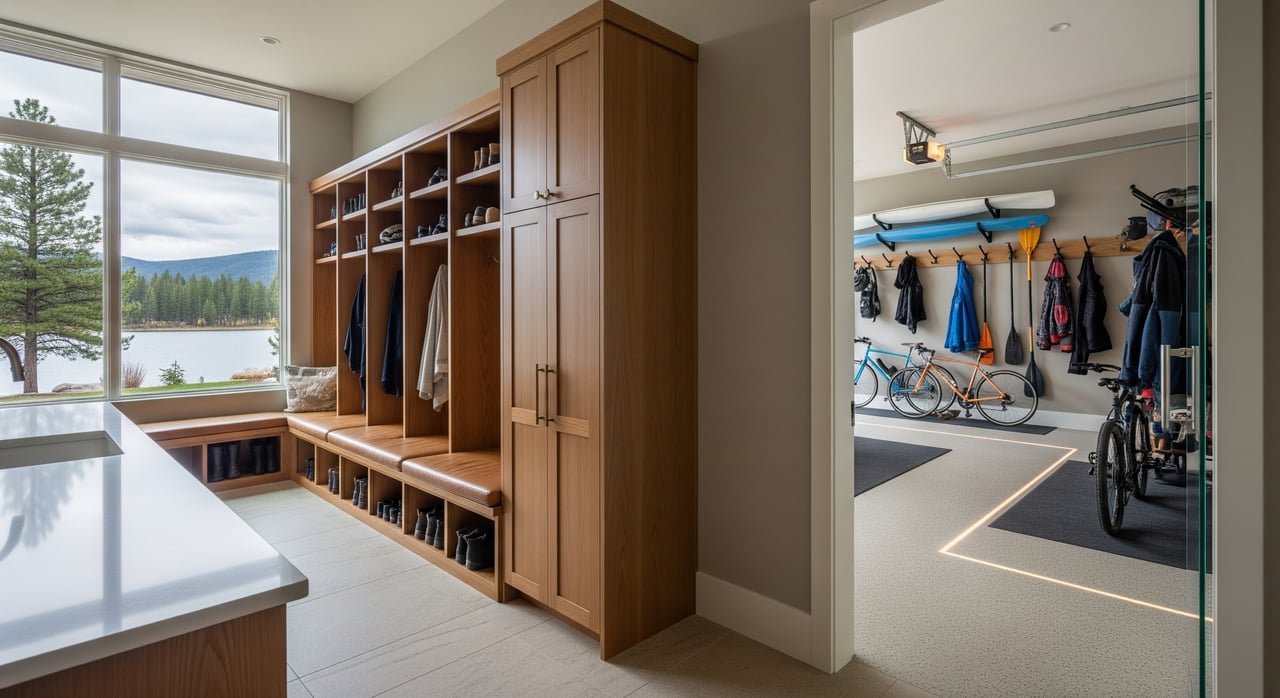
Lake days in July. Powder days in January. The same problem shows up either way: soggy boots, sandy boards, and dripping waders creeping toward your living room. If you love Flathead Lake and make quick runs to Blacktail Mountain, a purpose-built mudroom or gear garage can make daily life smoother and protect your home. In this guide, you’ll learn practical layouts, durable materials, and smart storage tailored to Somers. Let’s dive in.
Why mudrooms matter in Somers
Your lifestyle here shifts with the seasons. Summer brings wet and sandy paddleboards, kayaks, and fishing gear. Fall and spring add rain and melt. Winter means heavy snow, road salt, skis, boards, and insulated outerwear. A well-designed mudroom keeps that cycle from overwhelming your main living spaces.
A smart plan gives you fast access to vehicles and the outdoors, a place to rinse and dry gear, and storage that handles bulky items. With the right finishes, you also protect resale value.
Plan the right entry
Lakeside entry
If you launch often, consider a dedicated lakeside door that steps straight into a wash zone. This limits sand and water travel through the house and keeps traffic simple after a day on the water.
Garage entry
Many Somers homes benefit from a primary mudroom off the garage. It creates a clean handoff between vehicles and the house, and it’s the natural place for lockers, a bench, and boot storage.
Dual entry and adjacencies
For frequent lake use and mountain days, a dual-entry plan works well. Place laundry next to the mudroom so you can drop wet layers immediately. A nearby powder bath is useful for quick changes. Keep the mudroom on a main circulation route, but avoid making it the only path through the home.
Size and circulation that work
- Walkway width: Plan for 36 to 48 inches so you can carry boards, skis, or totes without bumping into walls.
- Bench landing: Leave 36 to 48 inches of open floor in front of benches or lockers to sit, remove boots, and gear up.
- Door sizes: Use 36-inch or wider doors. Double doors or an oversized roll-up door in a gear garage make moving paddleboards, kayaks, and bikes much easier.
Create zones that do the job
Wet zone
Include a washdown sink or hose, a floor drain or sloped floor toward a drain if heavy rinsing is common, and wall hooks for dripping items. Focus on ventilation and heat to speed drying and prevent odor and mold.
Storage zone
Use racks, lockers, and cabinets sized for your gear. Plan ceiling or wall storage for long items. Keep expensive gear in lockable cabinets.
Transition zone
Add a sturdy bench for boot removal, shoe cubbies, and a clean handoff point before entering the main house.
Storage for lake and mountain gear
Paddleboards and kayaks
Use wall racks, ceiling hoists, or vertical stands to keep boards protected and out of the way. When storing vertically, allow about 1 to 2 feet of horizontal clearance per board and include secure tie-off points. Ceiling hoists are great for freeing floor space.
Skis and snowboards
Install vertical racks or wall-mounted hooks with open airflow. Pair that with boot storage and a heated drying shelf or boot dryers to keep liners fresh and dry.
Fishing gear and waders
Add waterproof hooks for waders with a bin or shelf that drains. Place a utility sink or hose nearby for quick rinses after a day on the lake.
Boots and footwear
Choose ventilated cubbies or lockers and use sloped drip trays or removable waterproof liners. This makes cleanup simple and keeps salt and sand contained.
Bikes and paddles
Mount bikes vertically or from ceilings to save space. Provide lockable racks if you store high-value items in an accessible area. Keep paddles on dedicated hooks so they dry properly.
Washdown, drying, and ventilation
Sinks and hose hookups
A stainless utility sink with a flexible sprayer makes rinsing mud, sand, and brine easy. If you wash waders or wetsuits, hot and cold supply is worth it.
Drainage and freeze protection
If you plan frequent heavy washdowns, a floor drain in the wash zone helps. In our freezing climate, drains need proper design to avoid freeze issues. Consult local building practice before installing any new drain.
Drying systems
Use a mix of passive and active drying. Mechanical ventilation, heat, and active options like boot dryers, heated racks, or forced-air drying cabinets work well. Add a dehumidifier in tighter rooms to keep moisture in check.
Laundry integration
Place a washer and dryer near the mudroom. A utility sink by the laundry helps with quick rinses and keeps wet traffic out of your main areas.
Materials that can take a beating
Flooring
Choose impervious, low-slip options like large-format porcelain tile, sealed concrete with an epoxy or polyurethane coating, quarry tile, or waterproof vinyl plank. Avoid carpet or untreated wood in wet zones. Radiant in-floor heat adds comfort and speeds drying. Electric boot warmers or heat mats are helpful in specific spots.
Walls and lower wall protection
Use washable, impact-resistant materials at lower heights: beadboard with water-resistant paint, PVC or FRP panels, cement backerboard with tile, or metal panels behind the sink and laundry. In areas exposed to salt and moisture, choose stainless or coated metal hooks and hardware.
Built-ins and cabinetry
Pick moisture-resistant cabinetry such as marine-grade plywood or durable laminates. Slatted shelving improves airflow. Removable liners in cubbies make cleanup fast. Keep finishes neutral to stay timeless for resale.
Fixtures and utilities
Add a durable stainless sink, wall-mounted boot dryers, multiple GFCI outlets, and bright, even task lighting. Use a mechanical exhaust fan sized for the room. In tight or energy-efficient homes, consider heat recovery ventilation. Plan dedicated circuits for dryers and warmers, and ensure water-heater capacity meets your rinse needs.
Corrosion and freeze management
Insulate exposed plumbing and place drains to reduce freeze risk. Prefer indoor washdown stations in deep-freeze months. For outdoor racks, choose UV and corrosion-resistant materials and plan for indoor winter storage.
Layout ideas for any home
- Compact mudroom: A bench with shoe cubbies, a vertical hook wall for coats, a stackable washer and dryer in a closet, and a wall-mounted ski rack. Small footprint, big impact.
- Full gear garage: Convert or plan a larger bay with an oversized exterior door, a ceiling hoist for boards, a dedicated wash sink, a floor drain, bike hooks, lockable cabinets, and a boot-dryer wall.
- Dual-entry plan: A lakeside door opens to a wash zone with an outdoor board rack nearby, while the garage entry connects to a dry zone with wardrobes and a direct route to laundry.
Resale-friendly choices buyers love
- Flexibility: Use modular lockers and built-ins that can be reconfigured for different gear.
- Neutral finishes: Stick with timeless tile, painted cabinets, and hardware that appeals to a wide audience.
- Clear separation: Keep the mudroom functional but not your only path through the home. Tidy sightlines matter at showings.
- Size and features: Even a small, organized mudroom shows well. A full gear garage is a standout perk in Somers and broader Flathead County.
- Utility upgrades: Adjacent laundry, boot dryers, ample electrical, and secure storage for watercraft signal thoughtful planning.
Permits, safety, and next steps
Any structural change or new plumbing and electrical typically requires permits in Flathead County. Adding a floor drain, altering waste plumbing, or installing a new water heater should be handled by licensed pros. If you plan exterior racks or grading changes, consider stormwater and frost heave, and consult local requirements.
For safety and long-term value, ensure your ventilation and drying plan prevents mold. Keep records of water-handling upgrades for inspections and insurance. Provide secure, lockable storage for high-value gear to reduce theft risk.
Quick planning checklist
- Map your main entry routes for lake and mountain days.
- Inventory gear by size and quantity to right-size storage.
- Decide on indoor or outdoor washdown. Indoor is best in freeze season.
- Place laundry near the mudroom if possible. Consider a nearby powder room.
- Choose durable, neutral materials and plan ventilation, drainage, and electrical.
- Budget for hoists, heated drying, GFCI circuits, insulated plumbing, and optional radiant heat.
- Confirm permits and hire licensed contractors where required.
Ready to find a Somers home with the right mudroom potential, or want guidance on upgrades that help at resale in the Flathead Valley? Schedule a free consultation with Unknown Company. We’re here to help you match your space to your lake-and-mountain lifestyle.
FAQs
Should I add a floor drain in a Somers mudroom?
- If you expect frequent heavy washdowns for boats or boards, a floor drain in the wash zone is very useful. In freezing climates, it must be designed for freeze protection with proper outfall. Consult local code and a contractor.
What is the best way to store paddleboards near Flathead Lake?
- Store boards indoors or under a covered, ventilated outdoor rack. Ceiling hoists and wall racks protect from UV and theft. Allow 1 to 2 feet of horizontal clearance per board when stored vertically and include tie-off points.
How do I dry waders and ski boots quickly in winter?
- Provide hanging space for waders with a slight slope so water does not pool, use active boot dryers or heated shelves, and add solid ventilation. A dehumidifier helps in tight rooms.
Which flooring stands up to sand, snow, and salt?
- Large-format porcelain tile, sealed concrete with epoxy or polyurethane, quarry tile, and waterproof vinyl plank are durable, low-slip choices. Avoid carpet or untreated wood in wet zones.
Do I need permits for mudroom plumbing or electrical in Flathead County?
- Structural changes and new plumbing or electrical typically require permits. Use licensed plumbers and electricians for drains, sinks, or water heaters. Check with Flathead County Planning and Building Services.
How can I keep my mudroom design resale-friendly in the Flathead Valley?
- Use modular, flexible storage with neutral finishes, keep the mudroom separate from main traffic, and include features buyers appreciate like adjacent laundry, strong ventilation, and secure storage.