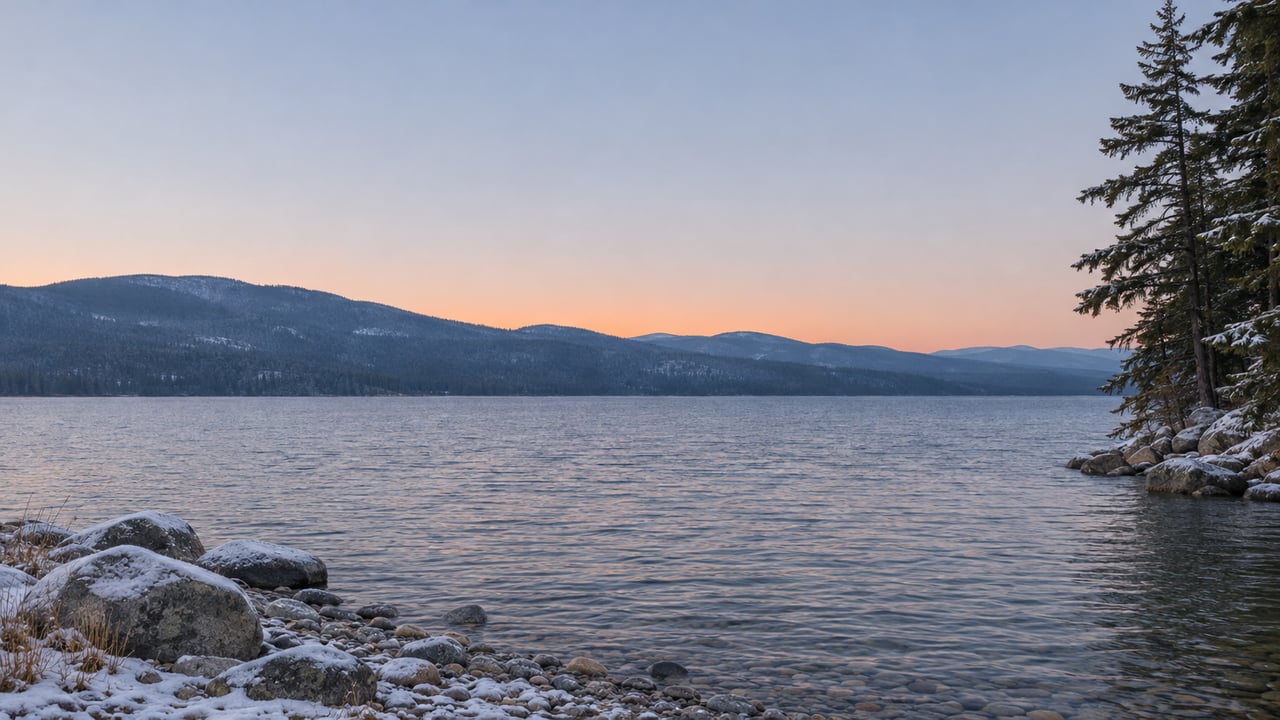
Flathead Audubon describes Polson as the gateway to the Mission Valley and calls the valley one of the best winter raptor areas in the western U.S. For anyone living between Polson and St. Ignatius, that puts some of the region's best winter wildlife viewing along Highway 93 and the county roads off it. Head south from the lake and you pass the waterfront gulls, the open-country hawks past Pablo, the reservoir at Ninepipe and the bison on the lower road at Moiese.
Open water decides much of what you'll find along that route. Last December's mild weather left more of it unfrozen than usual, and the Ninepipe Christmas Bird Count logged a record number of species. Each stop below depends on it in a different way.
Polson's waterfront and Boettcher Park
The drive starts in town. Flathead Audubon's hotspots guide sends birders to Boettcher Park, on the lakeshore behind the golf course on the east side of town, to scan Flathead Lake for migrant loons and waterfowl. Pacific Loons turn up among the migrant flocks there every November, and Pygmy Nuthatches are common in the park's ponderosa pines.
The downtown waterfront is where Polson stands out. The same guide calls the town the best local spot to find rare gulls. Mew, Glaucous, Glaucous-winged and Thayer's Gulls turn up most years among the larger flocks, which are mostly Ring-billed Gulls. The Polson sewer ponds draw the same gulls and are a good place to find Barrow's Goldeneye. To get there, take 7th Avenue west off Main, where it becomes Kerr Dam Road. Montana's only Little Gull record came from Polson in November 1999. If you're pairing the stop with lunch, our roundup of Polson's newer restaurants covers the food side of the trip.
South past Pablo, where the hawks winter
From Polson, Highway 93 heads south past the Pablo National Wildlife Refuge into open farm country. Flathead Audubon calls this stretch an "extraordinary opportunity" to study the plumages of wintering Rough-legged and Red-tailed Hawks. Prairie Falcons are common here, and Gyrfalcons are rare but turn up regularly. The guide also notes that county roads cross the Ninepipe and Pablo refuges, and it tells birders to watch for refuge, Waterfowl Production Area and Wildlife Management Area signs.
For a specific road, an older Montana Fish, Wildlife & Parks birding feature from 2008 named Back Road, west of Pablo, as a raptor route with a high density of Rough-legged Hawks. Hawks are the part of the route that depends least on open water, and last December they were one of the groups that came in below normal at Ninepipe.
Ninepipe, from the dam and the Highway 93 overlook
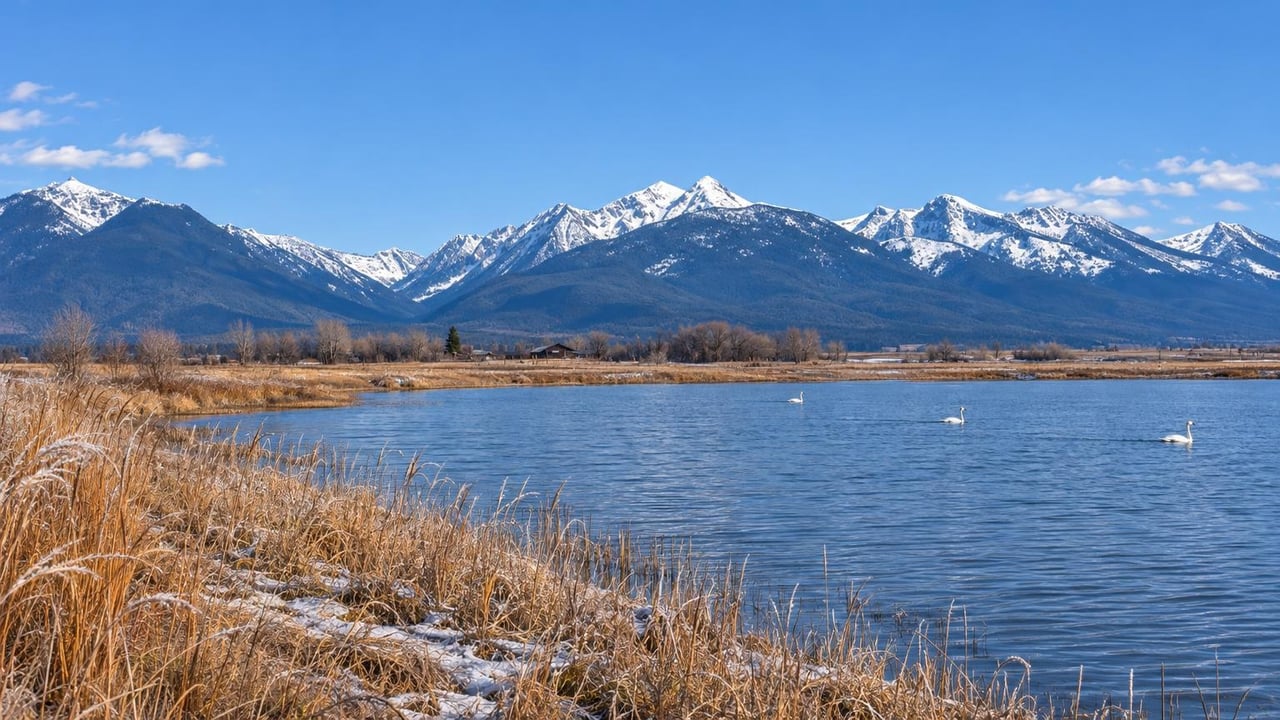
Just south of Ronan along Highway 93, Ninepipe National Wildlife Refuge has more than 800 glacial potholes around a reservoir. The refuge was established in 1921, and Flathead Audubon counts about 200 bird species recorded there. The guide lists Short-eared Owls among them and singles out the refuge's raptor viewing in winter.
The U.S. Fish & Wildlife Service points to two vantage points that show different birds. Ninepipe Road crosses the dam, and from that higher ground you look over the deepest water in the reservoir, which is where grebes and other diving birds are. The Watchable Wildlife Viewing Area on Highway 93 looks over shallower water used by shorebirds and dabbling ducks. The agency also says the area has a high population of northern harriers and short-eared owls, and it recommends a spotting scope on a tripod or window mount for distant birds on the water. Because the Mission Valley lies between the Pacific and Central flyways, the service notes, migrant numbers here aren't very large, but the variety can be great.
What last December's count found
That variety showed up in last winter's count. The 47th annual Ninepipe National Wildlife Refuge Christmas Bird Count took place south of Ronan on Dec. 21, 2025. In James Oates's report for Flathead Audubon, 28 participants tallied a record 88 species and 13,752 individual birds that day.
Oates credited the weather. The mild December left more water open than usual, and waterfowl numbers and species ran higher than normal. Mallards were the most numerous species at 2,883, ahead of European Starlings at 2,227. The count found 112 Trumpeter Swans, almost four times the usual number, and added a Purple Finch to the count's species list for the first time. Hawks and most other species came in lower, while crossbills and Pine Siskins were up. In a mild stretch like that one, more swans and ducks stay on the open water. In a hard freeze, the dam and the Highway 93 overlook have less to show, and the hawks past Pablo carry the drive.
Christmas Bird Counts take place between Dec. 14 and Jan. 5 each year. Last season, Flathead Audubon posted its local count schedule on Dec. 9, with the Ninepipe count on Sunday, Dec. 21. If you'd like to help count this year, Flathead Audubon's events page is the place to look in early December.
The Bison Range's Prairie Drive
The route ends at Moiese. The Confederated Salish and Kootenai Tribes run the Bison Range on a winter schedule from November through April. The range is open daily from 8 a.m. to 6 p.m., the front gate and visitor center are open 8 a.m. to 5 p.m., and the last Prairie Drive pass is sold at 4:55 p.m. Red Sleep Drive, the two-hour loop, is closed all winter. The range's FAQ explains that the road is steep and narrow, with a 10% grade. That leaves Prairie Drive, the one-hour lower road. When the Lake County Leader photographed a trip through the range this June, it reported a herd of roughly 350 bison, managed by CSKT Natural Resources.
A personal-vehicle day pass is $20, and a van with 10 or more seats is $35. The $60 annual pass expires at the end of the calendar year, so one bought this week covers only about five weeks. If you plan to keep coming back through spring, buying in January gets you the full year. The range stopped accepting federal park passes on Jan. 1, 2021, and CSKT tribal members enter free with Tribal ID.
The front gate is closed today for Thanksgiving, and it closes again on Christmas Day and New Year's Day. On Christmas Eve it's open 8 a.m. to 2 p.m. The range says weather can change its hours unexpectedly. It asks visitors to call at least an hour ahead and check road updates before heading out, and on a snowy morning that call can save you the drive.
Having Ninepipe, the waterfront and the Bison Range a short drive apart is part of daily life in Lake County. If you're thinking about a home somewhere along the stretch from Polson to St. Ignatius, Nelson Schwab would be glad to talk through the options. Schedule a free consultation.